Chronic conditions are the defining healthcare challenge of our time. The majority of healthcare spending goes toward managing long-term illnesses like diabetes,...
Read More
Want Better Care Without Leaving Home?
Sign up or log in to access personalized monitoring, care plans, and real-time health insights
Personalized recovery plans
AI-driven health care management with smart alerts and thresholds
Audiovisual therapy education for guided self-rehab
Real-time metrics capture for progress tracking
Why Is Chronic Disease Management One of the Biggest Drivers of RPM Adoption
Chronic conditions including diabetes, hypertension, cardiovascular disease, respiratory disorders, and obesity all share a common requirement: steady, long-term monitoring. These aren’t conditions that can be fully managed with quarterly clinic visits. They require visibility into daily health patterns over months and years.
Remote patient monitoring solutions give care teams exactly that. Key metrics tracked through RPM programs for chronic disease management typically include:
- Blood pressure and heart rate
- Blood glucose levels
- Oxygen saturation
- Weight fluctuations
- Medication adherence
- Rehabilitation and activity progress
Tracking these signals continuously allows providers to catch early warning signs before a condition deteriorates shifting care from reactive to proactive at the individual patient level.
Healthcare organizations across the United States continue adopting RPM because it improves quality metrics, supports preventive care, strengthens value-based healthcare initiatives, and helps clinicians manage larger patient populations more efficiently.
What Is Remote Patient Monitoring (RPM) and How Does It Work?
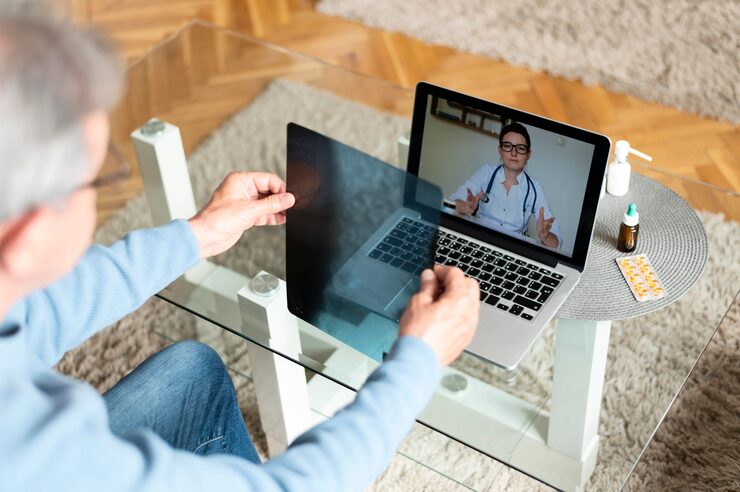
Remote patient monitoring is the practice of tracking a patient’s health data outside of a traditional clinical setting, using connected digital technology. Devices collect health information through wearables, smart sensors, mobile apps, and cloud-connected platforms and transmit it securely to providers in real time.
The result is that clinicians can oversee a patient’s condition without requiring them to be physically present. A typical RPM setup brings together:
- Connected health monitoring devices that capture biometric data automatically
- Cloud-based software platforms that store, organize, and analyze incoming data
- Real-time alert and notification systems that flag abnormal readings instantly
- Provider dashboards that surface trends and patient status at a glance
- Patient engagement tools including mobile apps, messaging, and reminders
Together, these components collect health metrics continuously and deliver them securely to the care team for review and action.
Many healthcare organizations in the United States integrate RPM with telehealth, Chronic Care Management (CCM), and Electronic Health Record (EHR) systems to create a connected healthcare experience that improves care coordination and long-term patient outcomes.
Why Health Monitoring Improves Patient Outcomes
Health monitoring means tracking vital indicators over time to understand a patient’s physical condition and treatment progress. It’s not a single event it’s an ongoing process that builds a picture of how a patient is actually responding to their care plan between appointments.
Consistent monitoring plays a central role across a wide range of care settings, including:
- Chronic disease management
- Preventive healthcare and early risk detection
- Elderly patient support and aging-in-place programs
- Rehabilitation and post-surgical recovery
- Medication adherence management
Providers increasingly rely on digital monitoring because it fills the visibility gap that appointments alone cannot cover. A strong remote monitoring strategy also strengthens patient engagement, supports treatment consistency, and improves long-term care coordination across multidisciplinary teams.
Does Remote Patient Monitoring Improve Patient Engagement and Treatment Adherence?
Yes, And this is one of the most consistently reported benefits of RPM programs.
Patients who receive continuous support between appointments tend to take a more active role in their own care. Monitoring systems create natural accountability: when patients know their activity, vitals, and exercise completion are being tracked, they’re more likely to follow through with their care plan.
Specifically, RPM programs support patients in:
- Sticking to prescribed medication schedules
- Completing rehabilitation exercises consistently
- Monitoring lifestyle habits that affect their condition
- Tracking their own progress over time
- Maintaining regular communication with their care team
That sustained engagement built not just on scheduled appointments but on daily, connected support tends to produce stronger long-term health outcomes than episodic care alone.
Top Benefits of Remote Patient Monitoring Solutions for Healthcare Providers
Healthcare organizations adopt RPM because it raises care quality while improving operational efficiency. The impact shows up across several dimensions.
Stronger chronic care management. Instead of relying on occasional clinic visits, providers track health metrics continuously. That makes it easier to identify worsening symptoms early and adjust treatment plans before a situation escalates.
Fewer unplanned hospital readmissions. Patients recovering at home stay connected to their care team throughout the process. That continuous connection reduces the likelihood of complications going undetected. Studies consistently link RPM programs to meaningfully lower hospitalization rates among chronic care patients.
Wider access to care. Remote monitoring reaches patients who often struggle to access clinic-based care including those in rural or underserved areas, older adults, and patients with limited mobility. They receive ongoing clinical support without the burden of frequent travel.
Better rehabilitation support. For patients recovering from surgery, injury, or a structured rehabilitation program, continuous monitoring gives providers the ability to follow recovery progress remotely and make timely adjustments keeping care consistent across the full recovery timeline.
Faster, more informed clinical decisions. Real-time data gives clinicians far more to work with than patient-reported symptoms during scheduled visits. By analyzing continuous health trends, care teams can detect problems earlier and act with greater precision.
Greater operational efficiency. Care teams work from dashboards that surface health trends and alerts clearly. When a reading looks concerning, they can contact the patient or update the care plan immediately without waiting for an appointment window to open.
How the Remote Patient Monitoring Process Works
RPM programs follow a clear, structured process designed to maintain high visibility and consistent patient engagement throughout the care period.
Step 1: Patient Enrollment and Device Setup Providers enroll eligible patients and supply connected devices matched to their clinical needs. These may include blood pressure monitors, pulse oximeters, smart scales, glucose monitors, or wearable health trackers. Patients are guided through setup and shown how to use each device correctly.
Step 2: Continuous Data Collection Devices automatically capture health data and transmit it securely through the cloud. Patients can also log symptoms, medication adherence, or rehabilitation progress through a connected mobile app adding self-reported context alongside device-generated data.
Step 3: Real-Time Monitoring and Alerts Care teams monitor dashboards that display health trends and flag readings outside safe parameters. When something looks abnormal, providers can contact the patient quickly, adjust the treatment plan, or escalate care as appropriate. Patients can also log in securely to view their own health data and track progress over time. A free signup also lets patients securely view their health information, track progress, and stay connected to ongoing support.
Step 4: Ongoing Care Coordination Monitoring systems connect to broader care coordination, rehabilitation, and chronic care workflows. This keeps care continuous, communication open, and all members of the care team working from the same picture of each patient’s status.
Advantages of AI-Powered Patient Health Monitoring Systems
Today’s monitoring platforms deliver clear benefits for both patients and providers.
Better accessibility. Patients receive continuous clinical support from home, without the need for frequent facility visits.
Greater independence. Those managing chronic conditions can remain more self-sufficient while staying connected to their care team reducing both isolation and dependence on in-person appointments.
More accurate, reliable data. Connected devices reduce the errors and gaps associated with manual symptom reporting, producing a more consistent and trustworthy data record.
Stronger preventive care. Providers can step in earlier when data points toward a developing complication before it becomes a crisis.
Tighter care coordination. Monitoring platforms improve communication among physicians, care coordinators, caregivers, and patients keeping everyone aligned without relying on fragmented communication channels.
You can download the app for free on Android or iOS and start improving care today.
Is Remote Patient Monitoring Cost-Effective for Healthcare Organizations?
This is a common concern and increasingly, an outdated one.
Today’s cloud-based RPM platforms are significantly more scalable and affordable than earlier generations of remote monitoring technology. The total cost depends on factors including the number of patients enrolled, device requirements, platform integrations, and the analytics capabilities needed. But the financial picture has to account for both sides of the ledger.
Many healthcare organizations find that RPM lowers long-term costs meaningfully through reductions in unplanned readmissions, stronger preventive care outcomes, and more efficient patient management. When viewed as a long-term operational investment rather than a one-time technology expense, the value case for remote patient monitoring is increasingly straightforward.
How AI-Powered RPM Platforms Improve Healthcare Operations
Modern remote patient monitoring solutions bring together a range of capabilities that were, until recently, available only in fragmented form:
- AI-powered health analytics that surface patterns across large patient populations
- Automated alerts that respond to real-time data without requiring manual review
- Telehealth integration for seamless transitions between monitoring and live consultation
- Care coordination workflows that keep multidisciplinary teams aligned
- Mobile patient engagement tools that support adherence and self-management
- Predictive health insights that help providers anticipate problems before they emerge
Together, these capabilities are helping healthcare organizations build a more proactive, connected, and scalable model of care one that extends clinical oversight far beyond the walls of any clinic or hospital.
Patients and organizations can also access related services through VitalWatch365 login for connected care management and monitoring support.
Related Posts
What Is Remote Patient Monitoring? Benefits, How It Works, and Why It Matters
Healthcare is no longer limited to hospitals and doctor's offices. Across the United States, healthcare providers are using Remote Patient...
Read More

What Is a Chronic Care Management Plan? Requirements, Benefits, and Best Practices
Managing chronic health conditions has become one of the biggest challenges in modern healthcare. Millions of patients live with long-term...
Read More