
Chronic conditions are the defining healthcare challenge of our time. The majority of healthcare spending goes toward managing long-term illnesses like diabetes,...
Read More
Chronic diseases such as diabetes, cardiovascular disease, COPD, arthritis, and hypertension continue to place enormous pressure on healthcare systems across the United States. Managing these long-term conditions requires more than periodic appointments it demands continuous monitoring, personalized care planning, and proactive intervention. Today, healthcare providers throughout the United States are using Artificial Intelligence (AI) to improve Chronic Care Management by identifying health risks earlier, supporting personalized recovery plans, strengthening patient engagement, and reducing avoidable hospitalizations. As AI-powered healthcare technologies continue advancing, chronic disease management is becoming more connected, predictive, and patient-centered than ever before.
What Is AI-Powered Chronic Care Management?

AI in healthcare refers to the use of advanced computational systems to analyze medical data, identify patterns, and support clinical decision-making. In the context of chronic care, AI plays a role across the full spectrum of care monitoring, diagnosis, treatment planning, and patient engagement.
Technologies commonly applied in chronic care management include:
- Machine learning models trained on large patient datasets to recognize patterns associated with disease progression
- Predictive analytics that forecast health risks before they become acute
- Automation tools that streamline care coordination and reduce administrative workload
- Natural language processing (NLP) that extracts clinically meaningful information from unstructured medical records
Organizations including Mayo Clinic and IBM Watson Health have explored how AI can assist clinicians in managing complex, long-term conditions. The central shift AI enables is from reactive to proactive care plan management.
Rather than waiting for a complication to appear, AI systems identify early warning signals, flag high-risk patients, and suggest preventive interventions often before the patient notices their condition is worsening. Care teams can act at the right moment, not just the scheduled one.
Across the United States, hospitals, physician practices, and digital health providers increasingly use AI to improve care coordination, analyze patient health trends, and support personalized treatment decisions for chronic disease management.

Want Better Chronic Care with AI?
Sign up or log in to access AI-driven care management and personalized recovery plans
Personalized recovery plans
AI-driven health care management with smart alerts and thresholds
Audiovisual therapy education for guided self-rehab
Real-time metrics capture for progress tracking
Why AI-Powered Chronic Care Management Matters
Traditional care management programs face several persistent, well-documented challenges: limited visibility into patient health between visits, delayed identification of complications, fragmented medical data across systems, and low patient adherence to treatment plans over time.
AI-driven care management programs are designed to address each of these directly.
Why does early detection matter so much in chronic disease? Because most chronic conditions deteriorate gradually and the window for low-cost, low-intensity intervention is widest early. Predictive models that analyze historical and real-time patient data can identify patterns linked to deterioration days or even weeks in advance. Subtle changes in heart rate variability, for example, can indicate cardiac stress long before a patient reports symptoms.
How does continuous monitoring change the care dynamic? Connected devices and digital platforms allow patients to be monitored outside clinical settings, reducing the dependency on hospital visits as the primary source of health data. Clinicians gain a continuous, longitudinal view of patient health not just periodic snapshots taken during appointments.
What does data-driven decision-making add to clinical care? It adds precision. When clinicians have access to insights generated from large, structured patient datasets, diagnostic accuracy improves and treatment selection becomes more evidence-based. Individual decisions are informed by patterns observed across thousands of similar cases patterns no human clinician could track manually.
Does AI actually improve patient engagement? Consistently, yes. AI-powered reminders, alerts, and virtual assistants help patients stay on track with their care plans between appointments.
Digital care programs using AI engagement tools have observed increases in patient engagement of 20–30% in some implementations a meaningful shift in a domain where non-adherence is one of the leading causes of poor outcomes.
Healthcare systems throughout the United States continue expanding AI-assisted care management because continuous monitoring and predictive analytics help identify health risks earlier while improving long-term patient engagement.
Top AI Technologies Transforming Chronic Care in the United States
How Does Predictive Analytics Support Early Intervention?
Predictive analytics is one of the most impactful AI applications in chronic care. By analyzing a patient’s clinical history, lifestyle data, and real-time health indicators, AI models can estimate the likelihood of specific complications including heart attacks, diabetic episodes, and hospital readmissions.
Hospitals using predictive tools have reported reductions in readmission rates of 15–20% in certain patient groups. Rather than responding to emergencies after they occur, providers can intervene earlier adjusting medications, recommending lifestyle changes, or scheduling timely follow-ups before the situation escalates.
This is the practical meaning of proactive patient care management: action at the right moment, driven by data rather than by crisis.
How Does AI Enable Personalized Care Plan Management?
No two patients respond to the same treatment in the same way and this is one of the most significant limitations of standardized care protocols. AI addresses this by customizing care plans based on each patient’s individual data profile.
Inputs that inform AI-driven care plans include:
- Full medical history and prior treatment responses
- Genetic information, where clinically available
- Daily lifestyle patterns captured through connected devices
- Real-time health metrics from monitoring tools
Critically, AI systems continue learning as new data comes in. The care plan isn’t fixed it evolves. A diabetic patient’s insulin regimen may be adjusted based on daily glucose patterns. A cardiac patient’s exercise recommendations may shift as recovery progresses. That dynamic adjustment, guided by real data, improves adherence and outcomes in ways that static plans simply cannot.
Clinical oversight remains essential throughout this process. AI informs and supports clinical decisions it doesn’t replace them.
What Role Does Remote Patient Monitoring Play in AI-Driven Care?
Many healthcare providers in the United States combine Remote Patient Monitoring (RPM) with AI-powered analytics to deliver proactive care for patients managing diabetes, hypertension, heart disease, respiratory disorders, and other chronic conditions.
- Wearable fitness and health trackers
- Smart blood pressure monitors
- Continuous glucose monitors
- Pulse oximeters and cardiac monitoring devices
Companies including Philips Healthcare and Medtronic have developed systems that integrate RPM data directly with AI analytics platforms. AI processes incoming data in real time detecting anomalies, triggering alerts, and generating trend analysis that would be impossible to produce manually.
A sudden spike in blood pressure, for example, can trigger an immediate alert for both the patient and their care team. That speed of response reduces risk and supports timely intervention before a manageable issue becomes a medical emergency.
How Are AI-Powered Virtual Assistants Supporting Chronic Care Patients?
Between clinical visits, patients with chronic conditions are largely on their own managing medications, monitoring symptoms, and making daily decisions that affect their health. AI-powered virtual assistants and chatbots help fill that gap.
These systems can send medication reminders, answer basic health queries, guide patients through daily routines, and provide relevant educational content all on a 24/7 basis. They don’t replace medical professionals, but they maintain a level of engagement and support that periodic appointments alone cannot sustain.
Patients who regularly interact with AI-powered digital assistants tend to show measurably better adherence to their treatment plans a direct contributor to improved long-term outcomes.
How Is AI Being Used in Remote Physical Therapy and Recovery?
Recovery from surgery or injury typically requires structured physical therapy and for patients who cannot visit a clinic regularly, accessing that structure has historically been difficult. AI is changing this.
AI-supported rehabilitation systems can track body movements using cameras or wearable sensors, provide real-time feedback on posture and exercise accuracy, and automatically adjust program difficulty based on each patient’s progress. Personalized rehabilitation plans delivered through these systems have been shown to improve recovery timelines and reduce dropout rates in therapy programs.
For patients managing recovery at home, this represents a meaningful expansion of access to quality rehabilitation support.
What Does Natural Language Processing Contribute to Chronic Care?
Healthcare generates enormous volumes of unstructured data clinical notes, discharge summaries, patient feedback, referral letters. Most of this information has historically been difficult to use systematically because it exists in freeform text rather than structured databases.
Natural Language Processing (NLP) changes that. NLP systems can identify risk factors embedded in physician notes, summarize complex patient histories, and surface clinically relevant information that would otherwise be buried in documentation. Organizations including Google Health are actively developing NLP systems to improve how medical data is processed and applied to clinical decision-making.
The practical benefit is twofold: reduced administrative burden for clinicians, and better-informed care decisions based on a more complete picture of each patient’s history.
Benefits of AI in Chronic Disease Management and Recovery

Healthcare organizations across the United States report improved care coordination, reduced hospital readmissions, and greater patient satisfaction by integrating AI into Chronic Care Management programs. AI-driven recovery plans offer several concrete advantages over conventional approaches:
Faster and more accurate diagnosis support. AI models can analyze imaging and clinical data rapidly, helping clinicians reach accurate conclusions more efficiently particularly valuable in complex or ambiguous cases.
Continuous, real-time care. Patients are monitored consistently between appointments, not just during them. Changes in health status are detected and acted upon in near real time.
Reduced healthcare costs. By preventing complications and reducing avoidable hospital visits, AI-supported programs lower overall treatment costs. Studies suggest cost reductions of 10–25% are achievable in well-managed care programs.
Better treatment adherence. Automated reminders, personalized guidance, and ongoing digital engagement improve patient compliance with medication schedules and care plan requirements.
Improved long-term outcomes. Early intervention and continuously tailored care produce compounding benefits over time fewer acute episodes, slower disease progression, and better quality of life for patients managing conditions that will not go away.
Related Posts
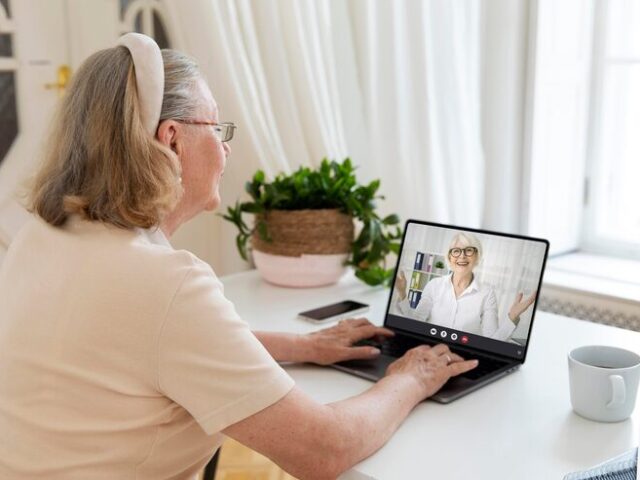
What Is Remote Patient Monitoring? Benefits, How It Works, and Why It Matters
Healthcare is no longer limited to hospitals and doctor's offices. Across the United States, healthcare providers are using Remote Patient...
Read More

What Is a Chronic Care Management Plan? Requirements, Benefits, and Best Practices
Managing chronic health conditions has become one of the biggest challenges in modern healthcare. Millions of patients live with long-term...
Read More