


Chronic conditions are the defining healthcare challenge of our time. The majority of healthcare spending goes toward managing long-term illnesses like diabetes,...
Read More

Ready to simplify chronic care management?
Discover how VitalWatch365 helps healthcare providers streamline care plans, improve coordination, and deliver better patient outcomes.
Personalized recovery plans
AI-driven health care management with smart alerts and thresholds
Audiovisual therapy education for guided self-rehab
Real-time metrics capture for progress tracking
Why Is Chronic Care Management Important?
Chronic Care Management matters because chronic conditions require constant attention that traditional office visits alone can’t provide. A patient managing diabetes and heart disease makes countless daily decisions about diet, medication, and activity, and small lapses can lead to serious complications and costly hospitalizations.
A strong care management program improves outcomes on several fronts:
- Better health outcomes: Consistent monitoring and support help catch problems early, before they escalate into emergencies.
- Fewer hospitalizations and readmissions: Proactive long-term care planning reduces avoidable acute events.
- Stronger patient engagement: Regular contact keeps patients informed, supported, and adherent to their care plans.
- Improved care coordination: A single, connected care plan prevents the gaps and duplication that occur when care is fragmented.
- A more sustainable practice: Providers gain a reliable framework, and a recurring revenue stream, for supporting their most complex patients.
In short, CCM turns the intent of good care into a consistent, repeatable process. Want to learn more? Visit our blog for practical guides, healthcare innovations, and expert resources on Chronic Care Management and patient care technology.
How Does a CCM Program Work in Modern Healthcare?
In modern healthcare, a Chronic Care Management program combines a dedicated care team, a personalized care plan, and technology that ties it all together. The typical process looks like this:
1. Identify Eligible Patients: Patients with two or more chronic conditions expected to last at least a year are enrolled with their consent.
2. Build a Comprehensive Care Plan: The care team creates a personalized plan covering conditions, medications, goals, and resources, forming the backbone of care plan management.
3. Deliver Ongoing, Non-Face-to-Face Care: Care coordinators check in regularly by phone or through digital tools, tracking symptoms, adjusting plans, and answering questions between visits.
4. Coordinate across Providers: The program keeps specialists, primary care, pharmacies, and caregivers aligned around one shared plan.
5. Document and Review: Every interaction is recorded, and care plans are updated as the patient’s needs change.
Modern CCM increasingly runs on connected platforms and mobile apps, so care teams can manage patients efficiently and patients can stay engaged from home. This technology-enabled model is what makes delivering consistent chronic care at scale practical for busy practices.
The Core Values That Make a Care Management Program Work
A Chronic Care Management program succeeds not just because of process and technology, but because of the principles behind it. The programs that deliver the best outcomes are built on a few core values:
- Continuity: Care doesn’t stop at the clinic door. Patients are supported consistently between visits, so nothing falls through the cracks.
- Personalization: Every care plan reflects the individual, their specific conditions, goals, circumstances, and preferences, rather than a one-size-fits-all template.
- Coordination: Primary care, specialists, pharmacists, and caregivers work from one shared plan, eliminating the gaps and contradictions of fragmented care.
- Proactivity: The goal is to prevent problems, not just react to them, through early detection and consistent long-term care planning.
- Empowerment: Patients become active participants in their own health, informed, supported, and engaged rather than passive recipients of care.
- Accountability: Every interaction is documented and every plan is reviewed, creating a transparent, measurable standard of care.
These values are what separate a checkbox program from one that genuinely improves lives, and they’re the reason a well-designed care management program earns patient trust and loyalty.
How Does Medicare Support Chronic Care Management Services?
Medicare has long recognized the value of Chronic Care Management and reimburses providers for delivering it. Medicare covers CCM services for eligible beneficiaries with two or more chronic conditions, paying for the non-face-to-face time care teams spend managing those patients each month.
Reimbursement is billed through specific CPT codes (such as those covering at least 20 minutes of clinical staff time per month, with additional codes for complex CCM and additional time). Medicare also supports Principal Care Management (PCM) for patients with a single, serious chronic condition, giving providers a way to be reimbursed for focused, condition-specific management.
According to, The 2026 Medicare Physician Fee Schedule sets the conversion factor at $33.57 for qualifying APM participants and $33.40 for non-qualifying participants. Exact code-level rates must be verified directly via official federal sources before publishing.
The takeaway for providers: Medicare not only encourages Chronic Care Management, it pays for it, making a well-run CCM program both clinically valuable and financially sustainable.
How Does AI Enhance Chronic Care Management?
Artificial intelligence is transforming how care management programs operate, making them more proactive, personalized, and efficient. AI enhances Chronic Care Management in several practical ways:
- Risk identification: AI can analyse patient data to flag those most at risk of deterioration or hospitalization, so care teams intervene earlier.
- Personalized care plans: Intelligent tools help tailor long-term care planning to each patient’s unique pattern of conditions and behaviours.
- Smarter monitoring: AI can surface meaningful changes in a patient’s data, cutting through noise so clinicians focus on what matters.
- Efficiency for care teams: Automating documentation, reminders, and routine follow-ups frees staff to spend more time on actual patient care.
- Better engagement: AI-driven prompts and insights help keep patients on track with their care plans between visits.
Used well, AI doesn’t replace the human care team, it amplifies it, allowing providers to manage more patients more effectively without sacrificing the personal touch that makes CCM work.
What Is the Future of Chronic Care Management Beyond 2026?
Beyond 2026, Chronic Care Management is set to become even more central to healthcare. As populations age and chronic disease rates rise, the shift toward continuous, value-based, and preventive care will only accelerate. Several trends are shaping what comes next:
- Deeper AI integration for prediction, personalization, and automation across the entire care journey.
- Expanded remote monitoring, with connected devices feeding real-time data into care plans.
- Greater emphasis on value-based care, rewarding providers for outcomes rather than volume.
- More unified platforms that bring care coordination, care plan management, and patient engagement into one connected system.
- Broader access, as mobile-first tools make ongoing care easier for patients wherever they are.
The direction is clear: chronic care is moving out of the clinic and into everyday life, supported by intelligent, connected technology. Providers who build strong CCM programs now will be well positioned for that future.
Ready to modernize your care management? Log in to your VitalWatch365 account or Sign Up today to streamline care coordination, improve patient engagement, and deliver smarter chronic care.
Why Every Healthcare Provider Needs a CCM Program in 2026
Bringing it together, a Chronic Care Management program has become essential for any provider serious about outcomes and sustainability. It delivers better care for the patients who need it most, strengthens engagement and retention, reduces costly complications, and provides a reimbursable, recurring framework for long-term care planning. Just as importantly, it positions your practice for a healthcare landscape that increasingly rewards continuous, coordinated, value-based care.
The question in 2026 isn’t whether your patients need chronic care management it’s whether your practice is set up to deliver it well. Contact us today to discover how VitalWatch365 can help you build a smarter, more effective Chronic Care Management program.
Deliver Better Chronic Care with VitalWatch365
Building and running a chronic care management program is far easier with the right platform, and that’s exactly what VitalWatch365 provides. VitalWatch365 helps healthcare providers deliver seamless care plan management, care coordination, and long-term care planning through one connected, easy-to-use system, so your team can support more patients, more effectively.
With VitalWatch365, providers can create and manage personalized care plans, coordinate care across the team, track patient progress, and stay compliant with Medicare CCM and Principal Care Management requirements. And because VitalWatch365 app is available on both iOS and Android, care teams and patients can stay connected anytime, anywhere, making continuous chronic care truly practical.
If you’re ready to strengthen outcomes, engage your patients, and build a sustainable chronic care management program in 2026, explore care plan management with VitalWatch365 and see how effortless coordinated care can be.
Related Posts
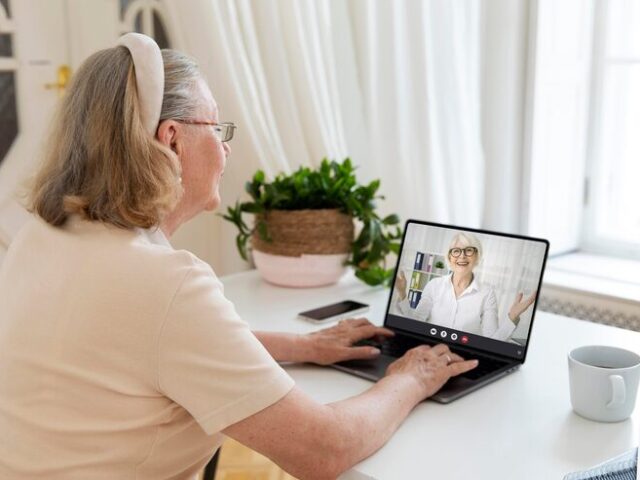
What Is Remote Patient Monitoring? Benefits, How It Works, and Why It Matters
Healthcare is no longer limited to hospitals and doctor's offices. Across the United States, healthcare providers are using Remote Patient...
Read More

What Is a Chronic Care Management Plan? Requirements, Benefits, and Best Practices
Managing chronic health conditions has become one of the biggest challenges in modern healthcare. Millions of patients live with long-term...
Read More