
Chronic conditions are the defining healthcare challenge of our time. The majority of healthcare spending goes toward managing long-term illnesses like diabetes,...
Read More

Is Remote Physical Therapy the Future of At-Home Recovery?
Sign up or log in to access customized therapy programs, monitor your recovery, and achieve better rehabilitation outcomes
Personalized recovery plans
AI-driven health care management with smart alerts and thresholds
Audiovisual therapy education for guided self-rehab
Real-time metrics capture for progress tracking
Is Remote Physical Therapy the Future of At-Home Recovery?
Sign up or log in to access customized therapy programs, monitor your recovery, and achieve better rehabilitation outcomes.
For people searching for remote physical therapy in the United States, the focus is increasingly on making at-home rehabilitation more convenient, measurable, and connected.
Personalized recovery plans
- AI-driven health care management with smart alerts and thresholds
- Audiovisual therapy education for guided self-rehab
- Real-time metrics capture for progress tracking
Together, these capabilities can support a more personalized remote PT experience in the USA, particularly for patients who need regular home exercises and digital progress tracking.
Why Traditional Remote PT Had Gaps
Remote PT helped with access. People could avoid travel, missed work, or long waits. But it still had blind spots.
A therapist on a video call can only see so much. Camera angles are bad. Lighting isn’t great. Subtle compensations are easy to miss. And once the call ends, there’s no visibility until the next session.
That’s where AI fills the gap. It doesn’t replace human judgment, but it adds continuous observation. Every rep matters. Every deviation gets noticed.
That alone changes how recovery happens. For patients across the United States, AI-assisted remote PT can add another layer of digital observation between scheduled therapy interactions, making home exercise activity easier to monitor.
How AI Tracks Movement at Home
AI systems use computer vision to watch how joints move in relation to each other. It looks at symmetry, speed, and stability. If a knee collapses inward or a shoulder lifts too high, the system flags it.
Feedback happens in real time. A voice prompt. A visual cue. Sometimes just a pause until the movement is corrected. That kind of correction usually only happens in person, but now it can happen at home.
The data collected builds a clear picture of how someone is progressing. Good days. Bad days. Plateaus. It’s all there.
This makes AI-assisted home physical therapy in the United States particularly relevant for patients who want more guidance while completing appropriate exercises outside a clinic.
How Therapy Treatment Plans Adjust Automatically
In traditional care, progression is planned in advance. Two weeks of this. Then we add that. But bodies don’t follow calendars.
AI-driven systems adjust based on performance. If a patient is improving faster, exercises progress. If fatigue or compensation appears, intensity drops. That reduces injury risk and frustration.
This flexibility keeps people engaged. They feel the therapy matches how they feel, not how the calendar says they should feel. For patients using remote PT in the USA, performance-based adjustments can help make digital rehabilitation programs more responsive to available exercise data.
Who Benefits Most from Remote PT with AI
Remote physical therapy works best for conditions that require repetition and controlled movement. Post-surgical rehab. Joint stiffness. Balance training. Chronic pain management.
It’s especially useful for people who struggle with access. Rural patients. Older adults. Busy professionals. Anyone who finds clinic visits hard to maintain.
It’s also helpful for long-term care, where consistency matters more than hands-on treatment every week.
In the United States, remote PT can be particularly relevant for people who live far from rehabilitation facilities, have transportation challenges, or need a more flexible approach to appropriate home-based therapy.
Where In-Person Therapy Still Matters
AI remote PT is not for everything. Some conditions need manual therapy. Some patients need emotional reassurance that only a person can give. Severe neurological cases still benefit from direct supervision.
The goal isn’t replacement. It’s balance. Remote PT handles what it does well. In-person care steps in where human touch is essential.
How Fully Autonomous AI Remote PT Works
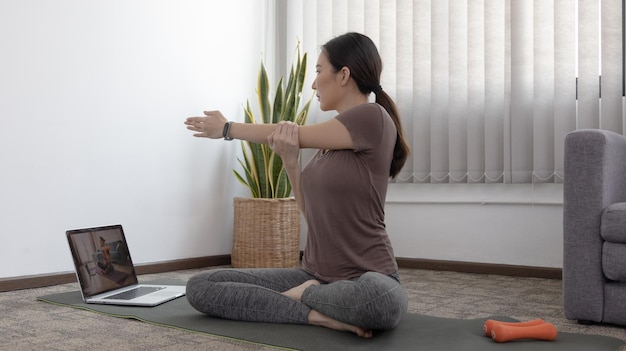
A true AI rehabilitation system isn’t just a video program or a pre-recorded exercise library. It includes multiple layers of intelligence working together:
 Computer Vision
Tracks body movement in real time similar to motion-capture used in sports labs and film animation.
Kinematic Analysis
Measures:
- joint angles
- gait patterns
- balance shifts
- movement symmetry
- speed and control
Voice-Guided Real-Time Feedback
The AI speaks corrections like:
- “You are doing great.”
- “Showing Repetition.”
- “Guiding every level with correct Posture”
Adaptive Learning
The system updates therapy difficulty automatically based on actual performance – not guesses or schedules.
For patients in the United States, adaptive learning can support a more personalized digital rehabilitation experience based on available performance information.
Predictive Recovery Model
After collecting enough movement data, AI can predict:
- how fast someone is progressing
- if they’re developing unhealthy compensation patterns
- whether exercises need modification
- when to increase difficulty or change routine
The system isn’t guessing. It’s learning the person.
How Engagement Improves Recovery

One reason people stop therapy is friction. Driving. Scheduling. Feeling judged for missing sessions. AI-supported remote PT removes a lot of that pressure.
Patients work on their schedule. Progress is private but tracked. Feedback is neutral. That leads to better follow-through, which honestly is half the battle.
People don’t need motivation speeches. They need systems that fit their lives.
For patients in the United States, home-based remote PT can reduce some of the practical barriers associated with frequent clinic visits and make appropriate rehabilitation easier to fit around work, family, and everyday responsibilities.
AI-Only PT vs Traditional Human-Led PT
| Feature | AI-Only Remote PT | Human Therapist |
|---|---|---|
| Availability | 24/7 access | Limited hours |
| Guidance | Real-time automated feedback | Manual/Verbal |
| Accuracy | Degree-level precision | Human observation |
| Cost | Lower | Higher ongoing |
| Personalization | Automatically adjusted | Manually planned |
| Progress Reports | Real-time | Periodic |
| Emotional Support | None | Present |
| Scalability | Unlimited users | Limited caseload |
Related Posts
What Is Remote Patient Monitoring? Benefits, How It Works, and Why It Matters
Healthcare is no longer limited to hospitals and doctor's offices. Across the United States, healthcare providers are using Remote Patient...
Read More

What Is a Chronic Care Management Plan? Requirements, Benefits, and Best Practices
Managing chronic health conditions has become one of the biggest challenges in modern healthcare. Millions of patients live with long-term...
Read More